Early access to Ridebase infrastructure is now open.
Launch ride-hailing, fleet management, or transit systems in days, not months, with full control and no vendor lock-in, where payments and payouts move with the trip.

Explore top-performing modules


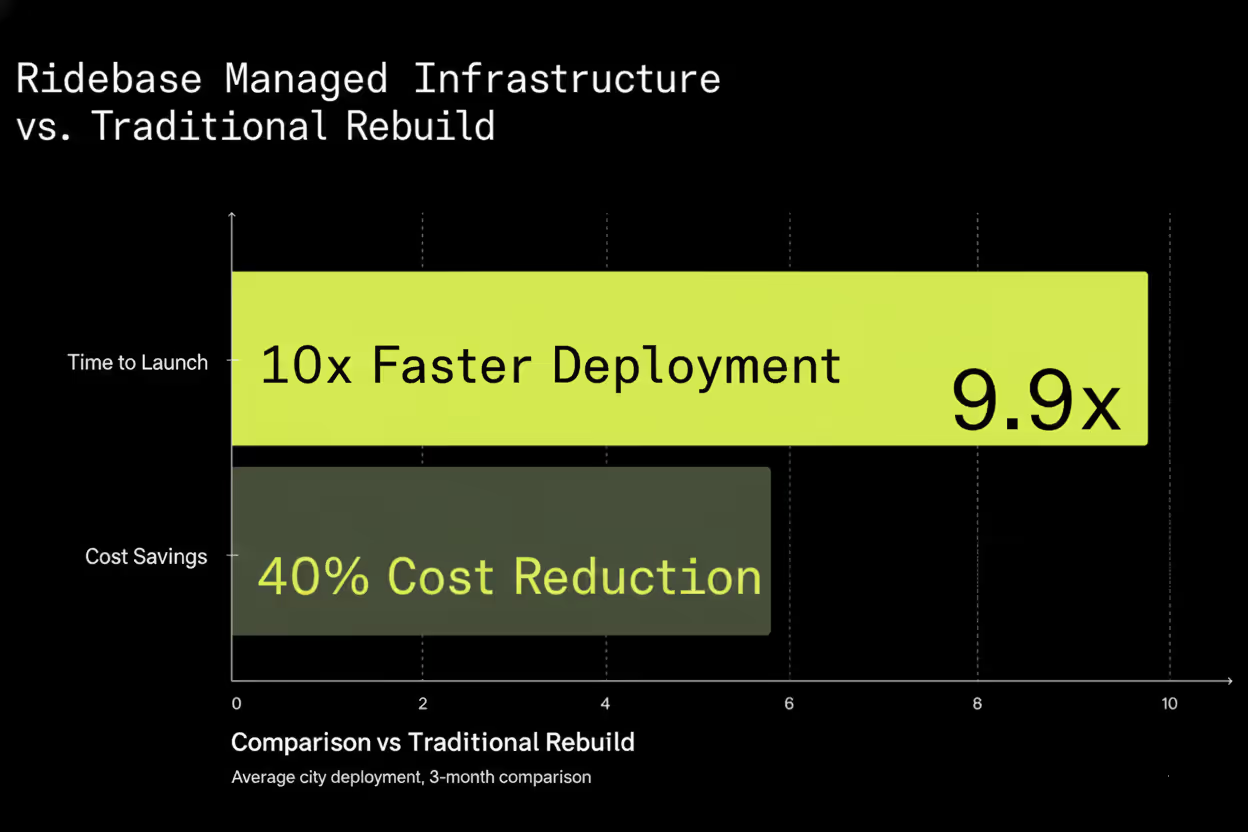
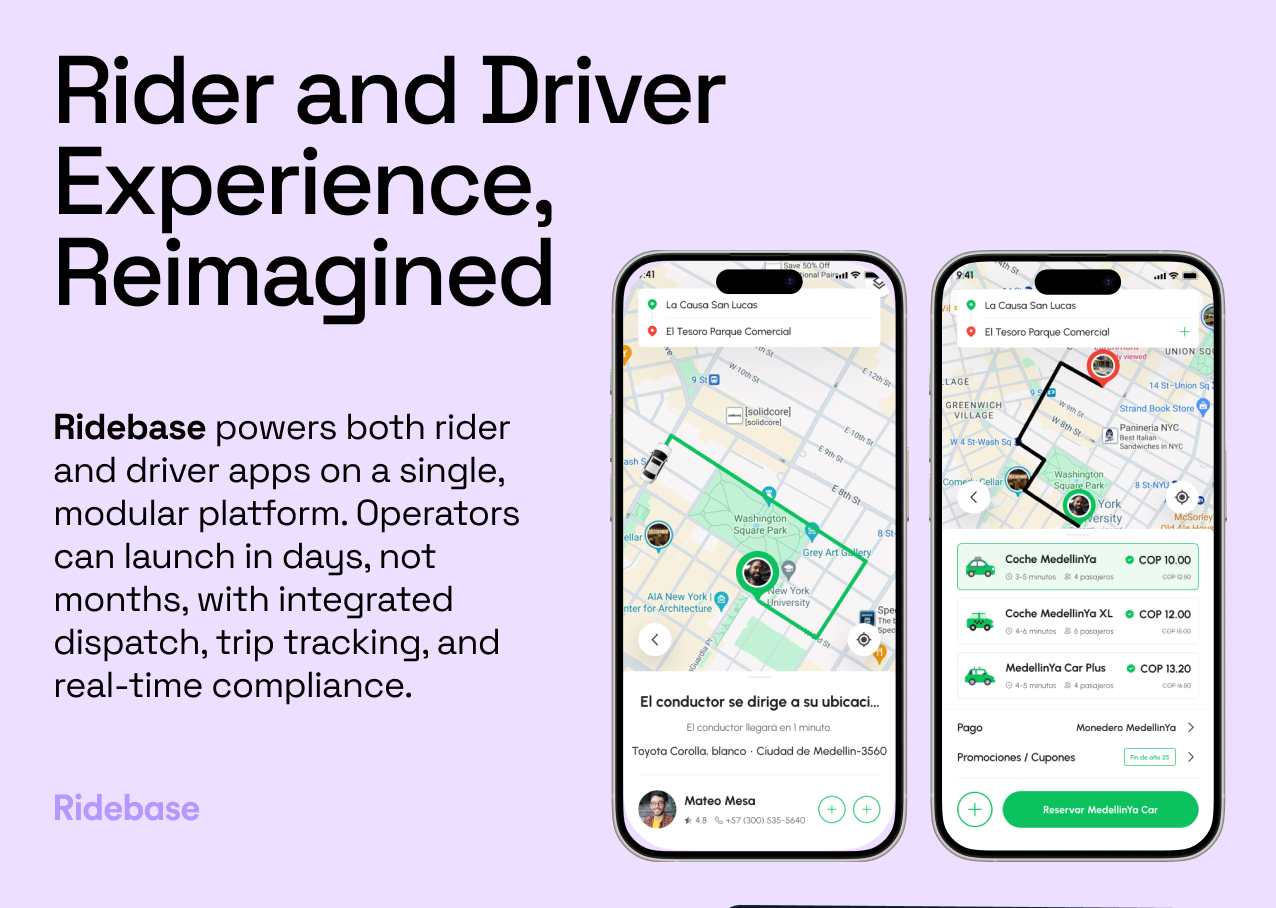
Launch in days, not quarters. Deploy mobility platforms 10x faster with modular primitives that eliminate custom integrations and rebuild timelines.
Scale from hundreds to millions of daily trips without re-platforming. Infrastructure auto-scales by demand while maintaining local data residency and <100ms latency.
Launch with compliance built-in: GDPR, CCPA, local regulations. Multi-region data residency, immutable audit trails, and right-to-delete come standard.
*Benchmarked against traditional rebuild timelines. Read our blog studies to learn more details.
.png)

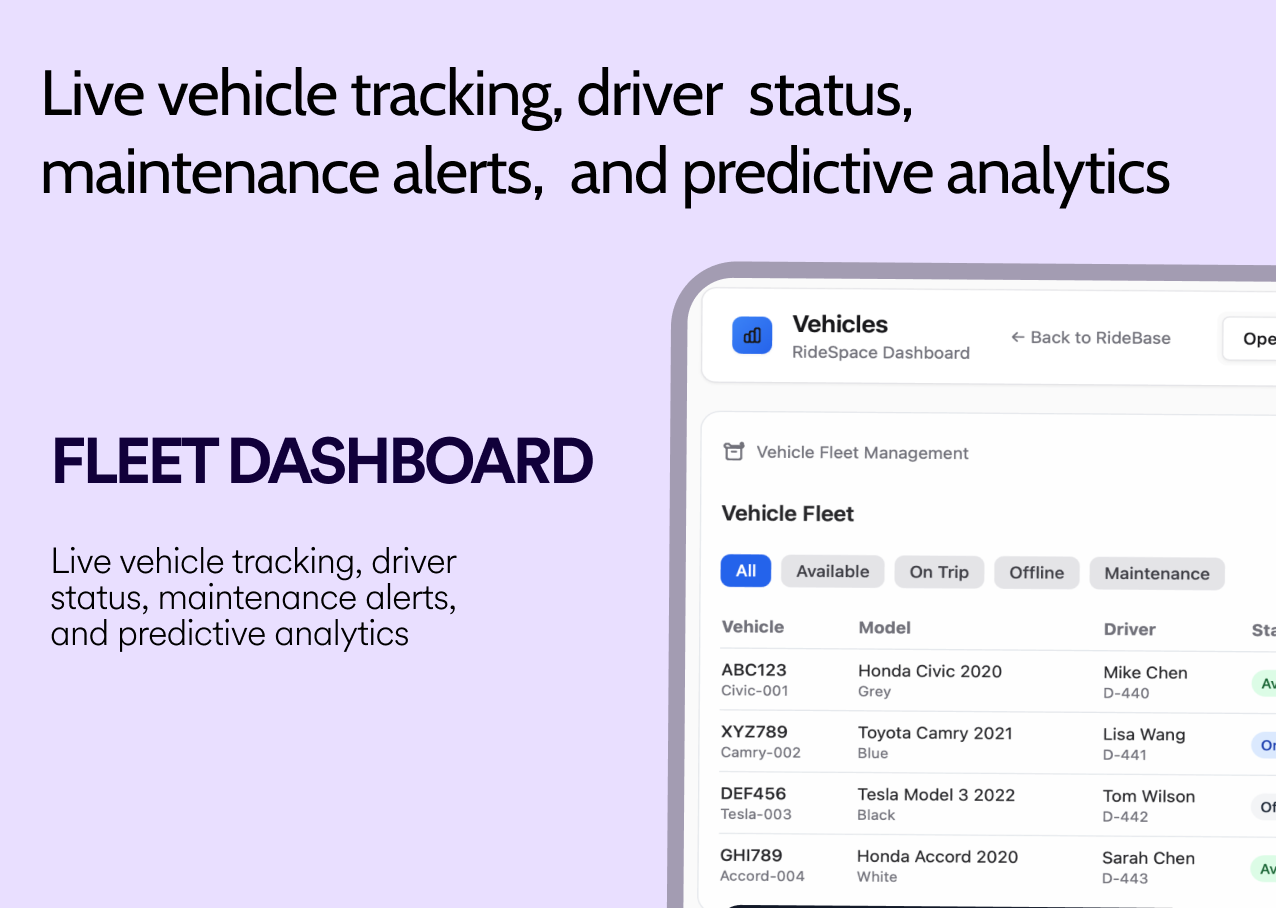
Ridebase is the infrastructure layer for cities and local operators who want Uber-grade mobility without vendor lock-in. It’s built for municipal rideshare and on-demand programs, taxi cooperatives modernizing dispatch, airport and campus mobility, paratransit-style operations, and private fleets that need enterprise controls.
You don’t buy a monolith. You assemble the blocks you need: driver onboarding, dispatch, pricing, payments, messaging, geofencing, payouts, support tooling, reporting, and compliance. Each block can be turned on, swapped, or extended without rebuilding the whole system.
Yes. Ridebase is API-first. If you already have mobile apps, a call center tool, or a web portal, you can connect them to Ridebase APIs and events. If you don’t, we can provide reference apps or help you launch with a simple web booking and operator console.
That’s the point. Start with the highest pain module, like dispatch, driver onboarding, or payouts. Add other blocks when you’re ready.
Data sovereignty and governance.
You choose where data lives and how it’s isolated. Ridebase is designed for per-tenant separation and region or country pinned storage options, with access controls, audit logs, and encryption. Cities can keep operational data inside their jurisdiction while still benefiting from the platform.